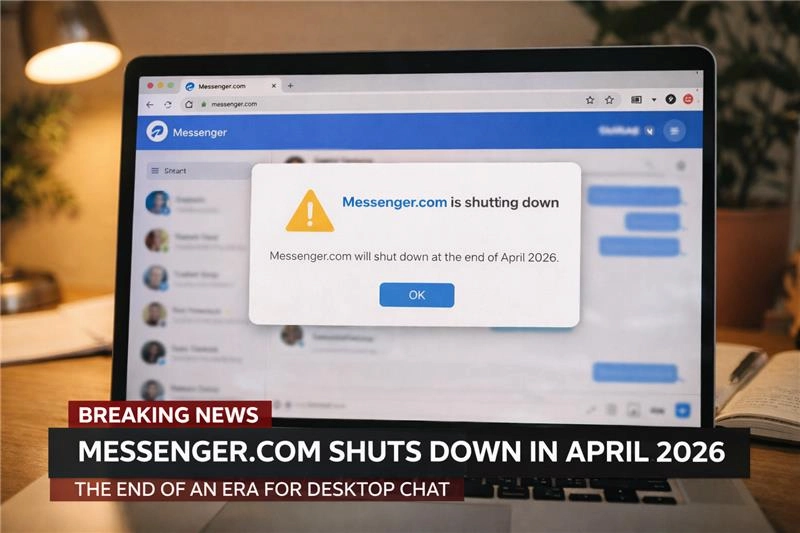
It's a Tuesday morning in April. You walk into your office, coffee in hand, sit down at your computer, and type "
messenger.com" into your browser like you've done hundreds of times before. Only this time? The screen looks different. Your clean, distraction-free chat window is gone. Instead, you're staring at the Facebook homepage—news feed, ads, suggested reels, all of it.

For a moment, you're confused. Did you type the wrong address? Did someone hack your computer?
No. This is exactly what Meta has planned.
On
April 15, 2026, the standalone
messenger.com website will stop working . No more sending or receiving messages through that dedicated portal. If you try, the system will automatically redirect you to the main Facebook site.
And here's the thing: if you run a business, this actually matters more than you might think.
First, Let's Look at the Timeline
Meta didn't just wake up one day and decide to pull the plug.
Back in December 2025, the company quietly removed its standalone Messenger desktop apps for Windows and Mac . If you had them installed, they simply stopped working.

At the time, messenger.com remained available. It became the last refuge for people who wanted to chat without the noise of Facebook's main interface .
Now that refuge is closing too .
The official shutdown date is April 15, 2026 . After that, you have two options:
That's it. No more standalone web experience.
So Why Is Meta Really Doing This?
Meta hasn't released a detailed public statement explaining the decision. But when you look at the pattern, the reasoning becomes pretty clear.
They're simplifying their ecosystem.
Right now, Meta maintains multiple ways to access the same service:
- The main Facebook website
- The standalone messenger.com site
- Mobile apps for iOS and Android
- Desktop apps that were already discontinued
Each platform requires maintenance, security updates, and engineering resources . By shutting down messenger.com, Meta reduces the number of interfaces it needs to support . That means faster updates and fewer potential security holes .
They want you on the main Facebook site.
This part isn't cynical—it's just business.
When you use
messenger.com, you see messages and nothing else. When you use
facebook.com/messages, you see messages plus the news feed, plus ads, plus reels, plus suggested content .
More time on the main site means more ad impressions. More ad impressions means more revenue .
They're betting everything on mobile.
Industry analyst Fabian Warislohner noted on LinkedIn that this move represents "a fundamental shift in how enterprise communication infrastructure will evolve" . The priority now is mobile-first experiences, with web access becoming secondary .
A Vietnamese news source summarized Meta's position this way: "The company is streamlining its product ecosystem, reducing the number of platforms that need to be maintained simultaneously" .
What This Actually Means for Your Business
Okay, so a website is changing. Why should business owners care?
Because for years, messenger.com served a specific purpose for professionals. It was a clean, focused workspace .
The Loss of a Distraction-Free Zone
If you've ever used
messenger.com during work hours, you know what I mean. No notifications about what your cousin had for dinner. No videos autoplaying in the sidebar. Just conversations.
That's disappearing.
Starting April 15, every time you open Facebook to reply to a client, you'll also see:
- The latest news feed updates
- Sponsored posts
- Suggested reels
- Friend requests
- Event notifications
For someone trying to maintain focus, that's not nothing.
Customer Response Time May Slip
Here's a scenario I've seen play out dozens of times with small business owners:
A client sends a quick question through Messenger. You're at your computer, so you open
messenger.com, reply in thirty seconds, and get back to work.
For someone trying to maintain focus, that's not nothing.